
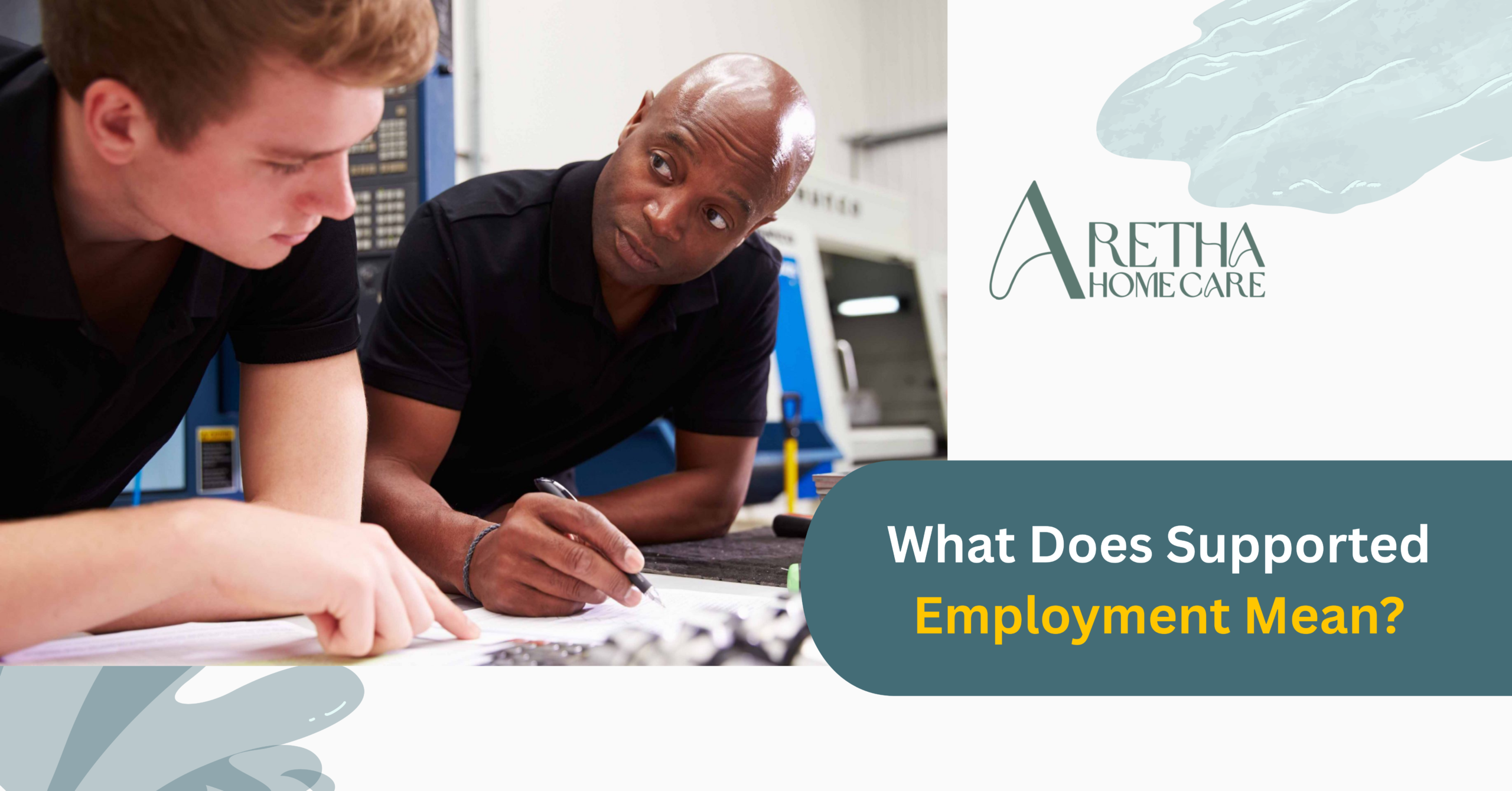
What is supported employment services? Supported employment refers to assisting one in finding a job and retaining it. People who might require additional assistance in the workplace should have it. This care can assist them in knowing how to do things, feeling secure and developing confidence.
At Aretha Homecare, we believe everyone should be able to work. We help people with developmental disabilities. We want to promote independence. We value dignity and hope. We help people find jobs through supported employment.
What Supported Employment Means
Supported employment goes beyond just getting a job. It’s about matching the right job to each supported employee.
That means we look at:
- What the person likes
- What the person is good at
- What kind of help may they need
- What workplace will be a good fit
Some people may need help learning new tasks. Some may need help talking with coworkers. Some may need help with a work routine. Supported employment gives help in a kind and steady way.
Why Supported Employment Matters
A paycheck is just the beginning; supported work also fosters pride, purpose and a sense of belonging.
Supported employment can help a person:
- Feel more confident
- Learn job skills
- Meet new people
- Take part in the community
- Build a more independent life
With the support that people need, they are able to do a lot more than many people believe. The job will make them feel noticed and appreciated.
How We Help at Aretha Homecare
At Aretha Homecare, we support employees with care and respect. We focus on inclusion, independence and growth.
Our supported employment services may include:
- Helping a person find a job that matches their interests
- Teaching work skills step by step
- Helping with job interviews
- Supporting work routines
- Encouraging good communication at work
- Helping people stay on the job
We do not rush the process. We move at a speed that feels secure and straightforward. We want each person to feel ready.
Skills We May Help Build
Supported employment can also help a person learn many useful skills.
Some of these skills are:
- Showing up on time
- Following directions
- Staying focused
- Working with others
- Asking for help when needed
- Finishing tasks
- Using tools or equipment safely
These skills can help a person do well at work and also in daily life.
Who May Benefit from Supported Employment
Supported employment can be a good choice for people who need extra help to work. This may include people with developmental disabilities who want to try a job or keep one.
It may help someone who:
- Wants to work but feels unsure
- Needs help learning job steps
- Needs support with social skills
- Needs a calmer place to learn
- Wants more independence
Every person is different. That is why support should be made for the person, not the other way around.
How Supported Employment May Look in Real Life
Supported employment can happen in many ways. A person may start by learning about jobs they might enjoy. Then they may practice interview skills. After that, they may begin work with support from our team.
For example:
- A person may learn how to greet customers
- A person may practice stocking shelves
- A person may learn to clean tools or work areas
- A person may get help remembering a schedule
- A person may learn how to speak up if something is hard
Small steps can lead to big progress.
The Role of Respect
Respect is very important in supported employment. Every person deserves to be treated with kindness.
At Aretha Homecare, we support each person with compassion. We want people to feel proud of what they do. We also want them to know their voice matters.
Work should never make a person feel left out. With the right help, work can feel like a place where someone belongs.
Signs a Person May Need Supported Employment
A person may benefit from supported employment if they:
- Want to work but do not know where to begin
- Need help learning job tasks
- Feel nervous in new places
- Need support with daily routines
- Want to build confidence
- Need help staying organized at work
If these things sound familiar, supported employment may be a good next step.
The Goal Is Growth
Supported employment is not only aimed at putting an individual in a job. This is to assist them in growing, learning and becoming successful.
Through the appropriate support, an individual can:
- Try new things
- Build better habits
- Gain independence
- Feel proud of their work
- Be an active member of the community
Such assistance can lead to a beneficial change in life.
Final Thoughts
So, what does supported employment mean? It means giving people the support they need to work in a way that fits them. It means finding the right job, teaching skills and offering care along the way.
At Aretha Homecare, we believe every person has value. We are here to support dignity, growth and inclusion. Supported employment is one more way we help people move forward with hope and confidence.
FAQs
Q. Who can get supported employment?
People with developmental disabilities who want to work may benefit from it.
Q. Why is supported employment helpful?
It can build confidence, teach job skills and help a person feel included.

No comment