
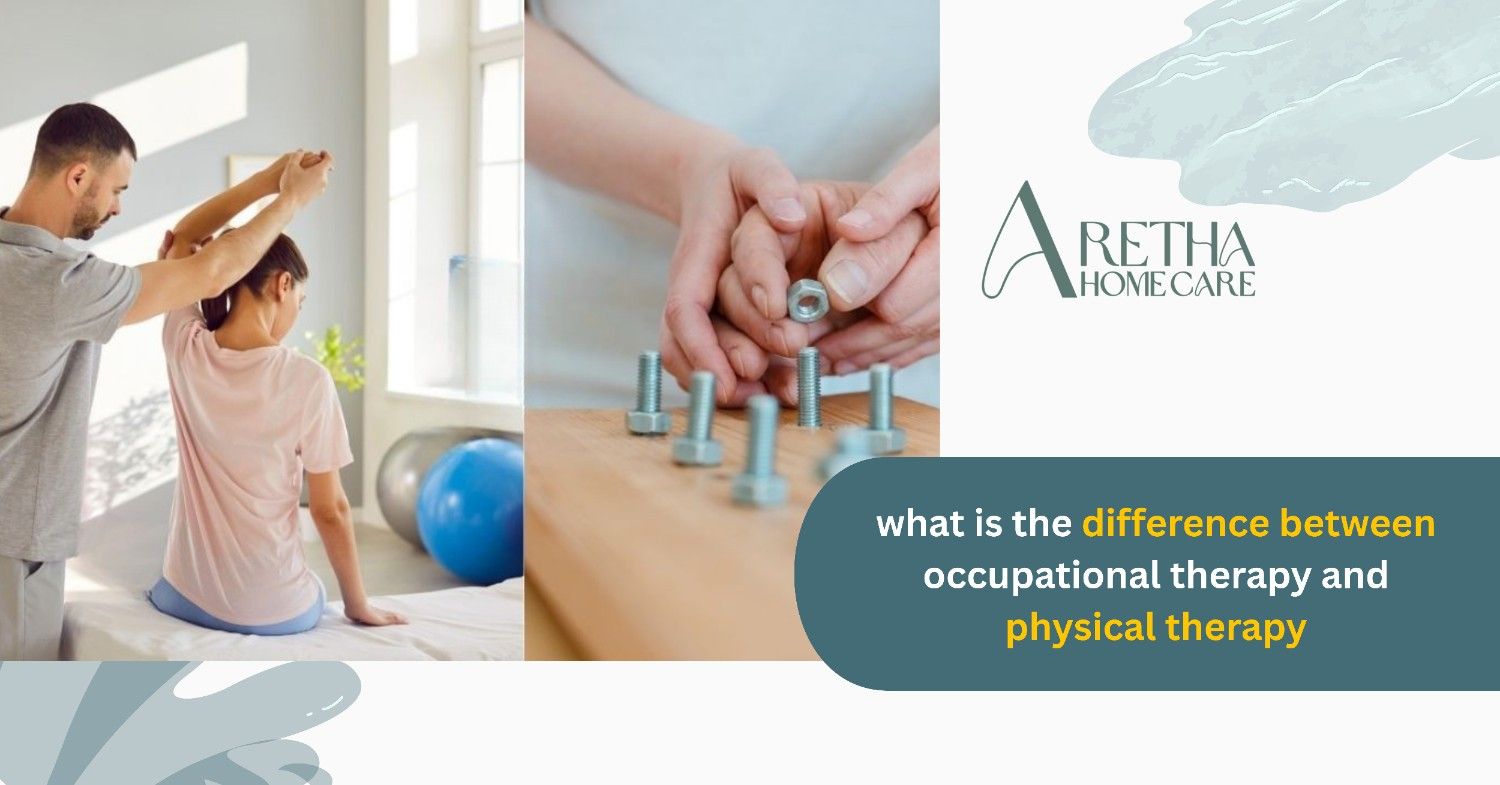
What is the difference between OT and PT? This is one of the most common questions posed by many families. Both make people feel good and accomplish more daily, but they are not the same. In this instance, we will define the distinction in simple terms and communicate how these therapies benefit the people whom we serve.
What Is Occupational Therapy?
Occupational therapy, or the medical term OT, is the one that assists individuals in their daily activities. These are what we refer to as occupations. They are eating, dressing, playing, learning, and working.
OT is concerned with things that a person desires and wants to accomplish. The therapist examines the work, the person, and the place where the work happens. It aims to make the task easier and safer. Whether a patient is seeking home-based care or outpatient occupational therapy, the focus remains on independence.
OT can help with:
- Eating or holding a pencil with the hands and fingers
- Knowing how to wear or tie shoelaces
- Working at home or in the workplace.
- Living comfortably with the help of tools or devices.
- Development of everyday routines and everyday skills.
OT uses small steps. The therapist instructs on new methods of doing things. They could vary the task, or they could vary the place. They make the individual feel proud of themselves.
What Is Physical Therapy?
Physical therapy or PT, assists the body in moving. PT focuses on strength, balance, and movement. The therapist deals with the muscles, joints, and the manner in which the body walks and stands.
How physical therapy can help:
- Exercise following an injury/surgery.
- Developing the ability to endure and be powerful.
- Enhancing fall prevention through balance.
- Decreasing the pain that affects the muscles or joints.
- Assistance in walking or in a wheelchair
The exercises, stretches, and hands-on methods are used by PT. The therapist can demonstrate how to position themselves in a manner that alleviates pain. They assist the individual in becoming stronger and moving with ease.
Difference Between OT and PT
Understanding the difference between physical therapy and occupational therapy helps you choose the right path for recovery:
Goal:
- OT helps you do your daily jobs. These jobs can be small or big.
- PT helps your body move better and be stronger.
Focus:
- OT looks at the full task. It may change the tools or the way you do the task.
- PT looks at the body and how it moves.
Setting:
- OT often works where you live, learn, or work.
- PT can be in a clinic, home, or gym.
Tools:
- OT may use special cups, grips, or tools to help with tasks.
- PT uses exercises, machines, and hands-on help.
Who They Help:
- OT helps people who need help with daily tasks, or with thinking, seeing, or feeling.
- PT helps people who need to move better after an injury, illness, or because of pain.
How They Work Together
OT and PT often work as a team. Every therapist comes with his or her competence. They are scheduled to provide you with the best assistance.
For example:
- An OT can visit a child experiencing difficulty in using both hands to learn new techniques for holding a pencil. A PT can help the same child boost their posture and balance.
- To regain strength, an adult who underwent surgery can visit a PT. They can also visit an OT to learn how to cook and dress again.
Cooperation is quicker. It assists the individual in applying their new skills in real life.
When You Might Need OT or PT
You might ask for OT if:
- You or your child needs help with dressing, feeding, or school tasks.
- You want to learn tools to make daily life easier.
- You need help with routines and daily planning.
You might ask for PT if:
- You have trouble walking or balancing.
- You feel weak after an injury.
- You have pain when you move.
If you are not sure, a therapist can check and tell you which help fits best. They will look at what you want to do and what is stopping you.
What to Expect in a Visit
First visit:
- The therapist will ask simple questions.
- They will watch you do some tasks or movements.
- They will talk about your goals.
Treatment plan:
- The therapist sets small, clear goals.
- They teach steps you can do at home.
- They check progress and change the plan if needed.
Sessions are friendly and hands-on. The therapist listens to you and your family. They show things one step at a time.
How We Help at Aretha Homecare
At Aretha Homecare, we support people with care and respect. We help adults and children with many needs. Our services focus on building skills and finding ways to join the community.
Services we offer that relate to OT and PT:
- Outpatient Occupational Therapy and Home-based OT.
- Physical Therapy.
- Behavioural Support.
- Community-Based Support.
- Community Inclusion.
- Respite Care.
- Individual Support.
- Prevocational Training.
- Supported Employment.
- Interpreter Services.
- Natural Support Training.
- Career Planning.
Our therapists work with you and your family. We make a plan that fits your life. We often meet in your home, in the community, or at our clinic. We teach you what to practice at home. We also use tools and small changes that help in daily life.
We focus on what matters to you. We help you build strength, skill, and confidence. We want you to live with dignity and independence.
Tips for Families
Talk plainly about goals:
- Say what matters most. For example, “I want to feed myself” or “I want to walk to the shop.”
Ask for a clear plan:
- A good plan shows simple steps. It says what to do at home.
Practice a little each day:
- Small steps every day help a lot. Five to ten minutes a few times a day can make a big change.
Use real tasks:
- Practice the real things you do each day. This helps skills stick.
Work with the whole team:
- OT and PT often help each other. Other supports like behavioural or community help, can also make a difference.
Simple Case Examples
Child who needs help:
- A child has trouble holding a pencil. An OT helps with hand games and special grips. A PT checks posture and balance. Together they help the child take part in class.
Adult after surgery:
- An adult had knee surgery. A PT gives exercises to build strength and teach safe walking. An OT helps with getting dressed and cooking safely while the knee heals.
Older adult with falls:
- A PT checks balance and strength. An OT looks at the home and suggests changes, like better lighting and safer ways to move at home. Together, they lower the chance of falls.
Final Thoughts
Both occupational therapy and physical therapy help people live better lives. While there is a clear difference between physical therapy and occupational therapy, they both share the goal of helping you live with dignity.
If you or a loved one needs help, talk to a therapist. Ask what your goals are. Ask how therapy will help you reach them. At Aretha Homecare, we listen to your needs. We work with you to make life easier and safer.
You are not alone. With small steps and steady support, you can do more each day.
FAQs
Q. How do I know which one I need?
If you need help with daily jobs, try OT. If you need to move or walk better, try PT. A therapist can check and tell you.
Q. What happens in the first visit?
The therapist asks simple questions. They watch what you do. Then they make a plan with small steps.

No comment